
Moscow Aviation Institute (Moscow Aviation University)
A guide to Moscow Aviation Institute (Moscow Aviation University) in Moscow, Russia: programs, tuition fees, admission requirements and campus life.
Moscow Aviation Institute (Moscow Aviation University)
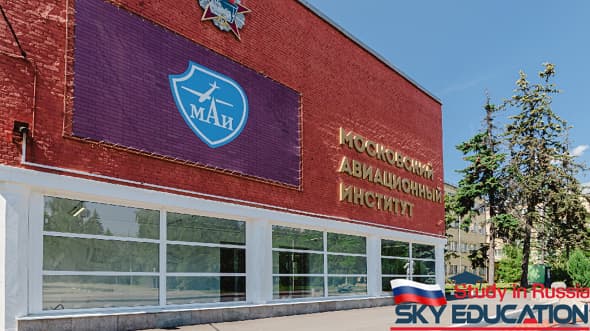 In the early 1930s, it began with two buildings and 290 students, but throughout the 20th century, these numbers grew significantly. Currently, there are over 450 professors, 1,100 associate professors, totaling more than 1,700 faculty members. The institute boasts over 20,000 graduates, undergraduate, and postgraduate students, spread across 10 university buildings and three institutes.
Among our alumni, we have 100 chief and lead designers who are members of the Russian Academy of Sciences. They have collectively spent 12 years in the field of space exploration with 21 cosmonauts and have earned 250 state awards. For our students, we offer more than 120 laboratories, 3 student design offices, numerous computer centers, an experimental design factory, and one airport.The institute's initial professors were Tupolev A.N. (the 'TU' aviation class), Mikoyan A.I. (the 'MIG' aviation class), and Yakovlev A.S. (the 'YAK' aviation class). Among MAI graduates, there are numerous astronauts, renowned academics, and scientists.
The Moscow Aviation Institute is a vast scientific hub. It constructs significant innovations using state-of-the-art technology alongside new devices, grounded in important scientific concepts that are both developed and originated here. Patents have been secured for five fundamental scientific discoveries in dynamic systems. Innovative power sources based on these new principles are applied in aircraft, space system units, and other applications.
The Moscow Aviation Institute rose in October 2009 to rank among the top 12 universities in the Russian Federation.
In the early 1930s, it began with two buildings and 290 students, but throughout the 20th century, these numbers grew significantly. Currently, there are over 450 professors, 1,100 associate professors, totaling more than 1,700 faculty members. The institute boasts over 20,000 graduates, undergraduate, and postgraduate students, spread across 10 university buildings and three institutes.
Among our alumni, we have 100 chief and lead designers who are members of the Russian Academy of Sciences. They have collectively spent 12 years in the field of space exploration with 21 cosmonauts and have earned 250 state awards. For our students, we offer more than 120 laboratories, 3 student design offices, numerous computer centers, an experimental design factory, and one airport.The institute's initial professors were Tupolev A.N. (the 'TU' aviation class), Mikoyan A.I. (the 'MIG' aviation class), and Yakovlev A.S. (the 'YAK' aviation class). Among MAI graduates, there are numerous astronauts, renowned academics, and scientists.
The Moscow Aviation Institute is a vast scientific hub. It constructs significant innovations using state-of-the-art technology alongside new devices, grounded in important scientific concepts that are both developed and originated here. Patents have been secured for five fundamental scientific discoveries in dynamic systems. Innovative power sources based on these new principles are applied in aircraft, space system units, and other applications.
The Moscow Aviation Institute rose in October 2009 to rank among the top 12 universities in the Russian Federation.
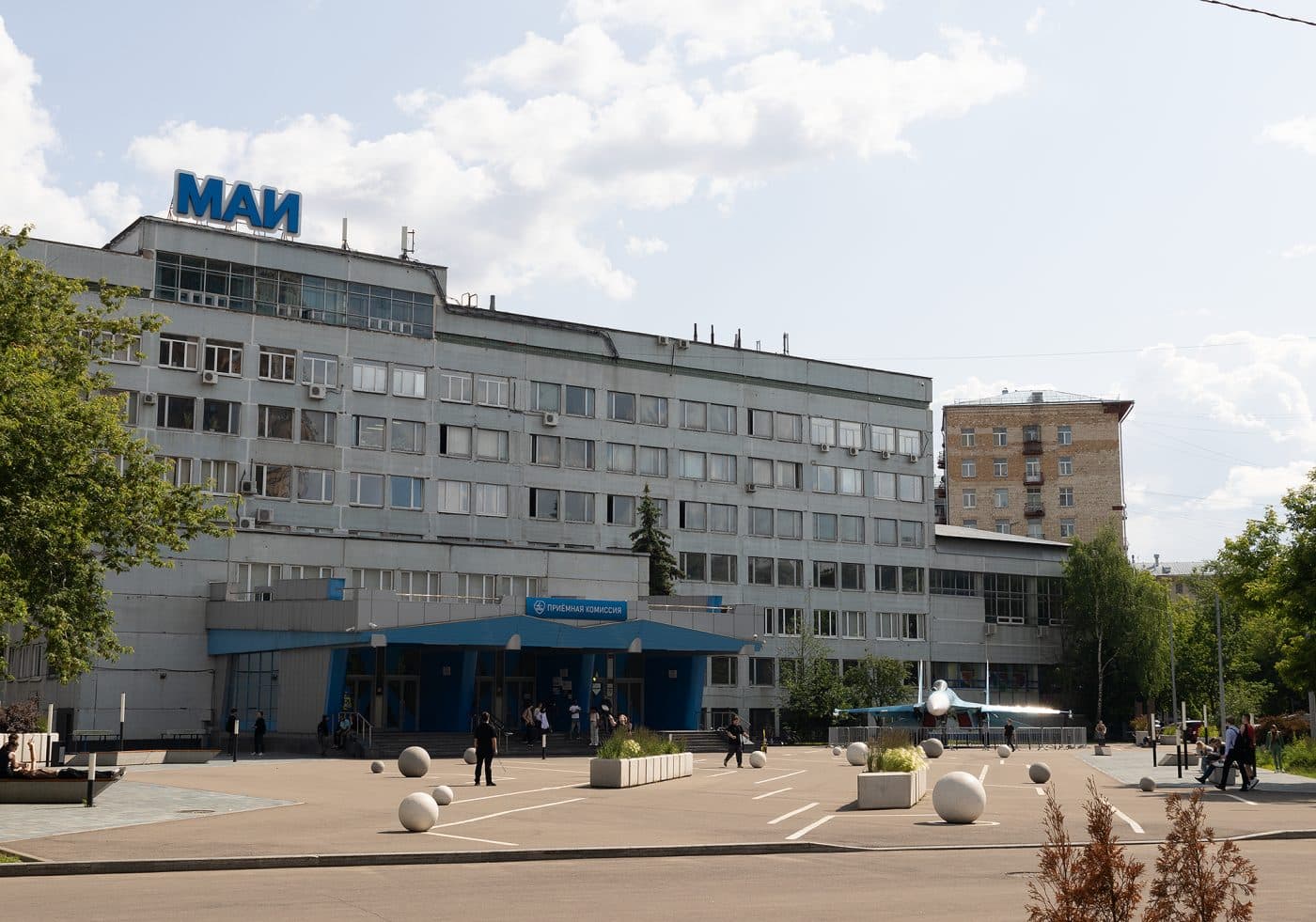 A mutual accommodation and additional services contract is signed between the students residing in the dormitories and the dormitory management.
The student management within the dormitory campus provides joint organization for students and offers necessary assistance.
The placement of students in the dormitories is decided by representatives of the faculty deans for both undergraduate and graduate levels.
The dormitories of the Moscow Aviation Institute are arranged in an apartment-style system. Each apartment consists of 2 or 3 rooms, with single or double occupancy. The bathrooms and toilets within the apartments are shared, accommodating a total of 5 people per apartment.
A mutual accommodation and additional services contract is signed between the students residing in the dormitories and the dormitory management.
The student management within the dormitory campus provides joint organization for students and offers necessary assistance.
The placement of students in the dormitories is decided by representatives of the faculty deans for both undergraduate and graduate levels.
The dormitories of the Moscow Aviation Institute are arranged in an apartment-style system. Each apartment consists of 2 or 3 rooms, with single or double occupancy. The bathrooms and toilets within the apartments are shared, accommodating a total of 5 people per apartment.
| Baglyukova Olga Vice Rector for the Development of the Institute Complex and Social Issues | +7 499 158-52-00 |
| Vasilevich Michael G. Chief engineer | +7 499 158-52-00 |
| Dormitory Directors | |
| Building 1 (Dubosekovskaya street, No: 9) Arseny Evgenia | Dahili 51-65 |
| Building 2 (Dubosekovskaya street, No: 13) Yarovaya Tatyana | +7 499 158-46-97 |
| Building 3 (Dubosekovskaya street, No: 12) Danilina Lyubov | +7 499 158-31-41 |
| Building 4 (Dubosekovskaya street, No: 10) Krivoşeeva Tamara | Dahili 58-61 |
| Building 6 (Dubosekovskaya street, No: 5) Postilga Ekaterina | +7 499 158-44-93 |
| Building 7 (Dubosekovskaya street, No: 18) Hodjaeva İrina | +7 495 494-23-05 |
| Building 8 (Dubosekovskaya street, No: 14) Semyonova Elena | +7 495 490-83-29 |
Sports Club Branches:
Sports Center «Çerepaha»
Aikido
Rowing
Athletic
Gymnastics
Aerobics
Badminton
Volleyball
Greco-Roman
Wrestling
Table Tennis
Rock Climbing
Sports Club, K. Tsaryova, No: 12a
Athletic Gymnastics
Mountain Ski
Yoga
Karate
Ice Skiing
Mini Football (Men's Team)
Mini Football (Women's Team)
Street fight
Tennis
Tae-kwon-do
fitness
Football
Boxing Gym, Gymnastics Hall
Arm Wrestling
Boxing
Wrestle
Judo
Duel Shooting
Yoga
Shot
Sports Center «Tushino»
Athletic Gymnastics
Basketball
Weightlifting Sport
Latin Dance
Tennis
University Sports Center "Science"
The University Sports Center "Science" is where students attend common physical education classes, learn fundamental rules, and where exercises for sports teams and inter-team competitions across different disciplines take place.
Faculties and Departments;
Preparatory Faculty For foreign students enrolled at the Moscow Aviation Institute, Russian language and preparatory courses are offered. The aim is to enable foreign students to advance and develop their studies at the Moscow Aviation Institute. Another goal of the preparatory course is to enhance the mathematical, physical, and technical drawing skills of foreign students, thus contributing to their success in their respective departments. These preparatory courses also provide Russian candidates with the opportunity to improve their knowledge.
Aerospace Engineering
No: 101 Aircraft Design
No: 102 Helicopter Design
No: 103 Design Over Installed Mechanical Systems
No: 104 Manufacturing Engineering and Total Quality Control
No: 105 Aerodynamics (Science of Air Movement)
No: 106 Flight Dynamics and Control
No: 107 Conceptual Design and Efficiency of Aviation Systems
No: 108 Documentation
At the helm of the school is Engineer and Scientist, Professor Alexander V. Efremov. He also manages the Flight Dynamics and Pilot Vehicle Systems Laboratory, which is Department 106.
The Moscow Aviation Institute nurtures highly talented engineers for aviation design.
Annually, the Moscow Aviation Institute admits 290 students and registers 15-20 postgraduate students. Additionally, it boasts an expert faculty dedicated to educating international students. The curriculum encompasses various educational programs like technological design. Many undergraduate students might face challenges in Pilot Training at the Airport.
The Moscow Aviation Institute encompasses Research and Development departments such as the Pilot Vehicle Systems Laboratory, the joint engineering design office "Aerocar," OSKBS – Special Design Bureau for Experimental Aircraft Construction, STO-1 – Technical Maintenance Sector for Special-Purpose Computers, SKB-AM – Student Design Office for Aircraft Modeling, and others.
Presently, within the Russian Academy of Sciences, there are 28 professors, 48 associate professors, 9 senior lecturers, and 6 assistant professors contributing to the institute.
Engines of Flying Vehicles
No: 201 Theory of Gas Turbine Engines
No: 202 Rocket Engines
No: 203 Engine Construction and Design
No: 204 Space Heating Engineering
No: 205 Flying Vehicle Engines Manufacturing Technologies
No: 206 Flight Dynamics and Control
The Moscow Aviation Institute stands as the world's premier academic hub, delving into research on all types of engine manufacturing technologies for theoretical design, jet aircraft, helicopters, and modern flying vehicles. It also provides educational opportunities concerning power plants for liquid- and electric-powered rocket engines and spacecraft. Additionally, the institute specializes in standardization and certification in engineering environmental protection and plasma power plants.
The knowledge derived from Mechanical and Transportation Engineering is applied in compressed power sources, compressed machinery, plasma vacuum technologies, cryogenic technologies, and fire control equipment.
No 301 Automatic and Intelligent Control System
No 302 Information Technology Automated Systems and Control
No 303 Devices and Measurement-Calculation Complexes
No 304 Computer, Computer Systems and Network
No 305 Automatic Orientation Complexes and Navigation Systems
No 306 Microelectronic Electrical Systems
No 307 Instrumentation Systems
No 308 Information Technologies
No 309 Theoretical Electrical Engineering
No 310 Electrical Energy, Electromechanical and Biotechnology Systems
No 311 Mathematical Simulation
Moscow Aviation Institute offers teaching in Control Systems, Informatics and Electro Power Systems;
Moscow Aviation Institute (Moscow Aviation University)
Application for Education in Russia
Fill in the form and our advisors will contact you shortly.